




Location
 Contact Us
 
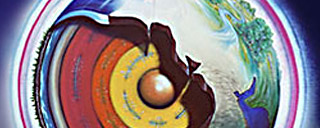
Creation Model
Noah's Ark
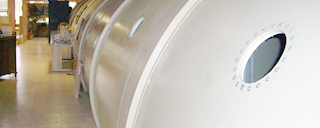
Hyperbaric Biosphere
Creation In Symphony Videos Now Online
Watch the entire video series on our YouTube Channel
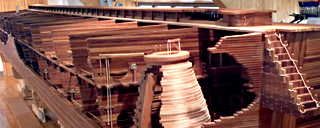
Noah's Ark Replica
Dramatic 25 Foot Detailed Replica
Biosphere Project
Re-creating What It Was Like Before Noah's Flood
11
Apr

Creation Devotional April 11 - Biology

Daily Devotional – April 11

Biology


When an adult California ground squirrel discovers a rattlesnake lurking nearby, it often harasses it. In this area, baby ground squirrels make up 69% of the rattlesnakes’ diet. Therefore, the adult ground squirrel harasses the rattlesnake by dashing around it, nipping at its tail, kicking sand on it and waving his tail at it. The rattlesnake is not as fast or agile as the ground squirrel. If bitten, the ground squirrel doesn’t die because adult squirrels have proteins in their blood to neutralize the rattlesnake venom. Baby California ground squirrels, however, have not yet developed enough proteins to neutralize the poison. The ground squirrel will even taunt the rattlesnake by shunting extra blood to its tail, so it will heat up. Rattlesnakes can see heat (infra-red) and, therefore, lunges for the extra hot tail. Eventually the rattlesnake becomes frustrated and retreats. Interestingly, ground squirrels also harass gopher snakes – 50% of the gopher snakes’ diet also is baby ground squirrels. Gopher snakes, however, do not see heat, so the ground squirrel does not shunt extra blood to its tail when fighting with this kind of snake. How does a ground squirrel know that a rattlesnake can see heat and a gopher snake cannot? God knew the California ground squirrel would need this for its offspring’s defense, so He designed it to discern the difference.


O Lord, how manifold are thy works! in wisdom hast thou made them all: the earth is full of thy riches.

~ Psalm 104: 24


Source: "Pearls in Paradise" by authors Bruce Malone and Jule Von Vett

References for this devotional.

11
Apr

Creation Devotional April 8 - Biology

Daily Devotional – April 8

Biology


Have you heard of the coywolf? Genetically it is ¼ wolf, 1/10 dog and the rest coyote. The coywolf is a hybrid twice the size of a coyote, able to hunt in both the woods (traditionally the place for olves) and on the prairies (traditionally the place for coyotes). With the help of the dog genetics, it is able to hunt in urban areas by eating rodents and pets or scavenging. If you spot one in suburbia, you will even notice that it may look both ways before crossing the street!


How did the coywolf come about? When the wolves of southern Canada experienced environmental problems of deforestation and drastic hunting, they began to interbreed with both coyotes and large breeds of domesticated dogs. The coywolf is not the result of evolution but the in-built diversity of genetic code that God has placed within the dog kind. It has also been  demonstrated that wolves, coyotes, and domestic dogs are the same kind since they can successfully interbreed.


And at evening let them return; and let them make a noise like a dog, and go round about the city. Let them wander up and down for meat, and grudge if they be not satisfied.

~ Psalm 59:14-15


Source: "Pearls in Paradise" by authors Bruce Malone and Jule Von Vett

References for this devotional.

11
Apr

Creation Devotional April 6 - Biology

Daily Devotional – April 6

Biology


Have you heard of a cave weta? This New Zealand insect lives in mountain top caves that can experience -10 oF during the winter. This insect actually freezes solid for three months - showing no brain activity or respiration. Then in the spring, it thaws out and proceeds with life as normal – doing whatever big bugs enjoy doing in the spring. They can go through six such freeze-thaw cycles in their lifetime, often living up to six years.


When humans freeze, crystals form in our blood, bursting our cells and causing our death. Wetas, however, have high levels of glucose, a sugar which keeps these crystals from forming. Evolutionists assume this all happened by accident and chance. What would have happened to the first weta that had not yet evolved a high enough sugar level in its blood? We’d have a dead weta! Evolutionary advancement would have ended, along with the first wetas! God had to design the cave weta to survive freezing from the beginning. Creation is shouting God’s glory!


O Lord my God, thou art very great;….

~ Psalm 104:1


Source: "Pearls in Paradise" by authors Bruce Malone and Jule Von Vett

References for this devotional.

11
Apr

Creation Devotional April 5 - Biology

Daily Devotional – April 5

Biology


Have you considered that birds like gannets and blue-footed boobies dive into the water at high speeds and do not break their necks! How do birds survive a dive like that? These birds come equipped with their own built-in “air bags”!


Gannets and blue-footed boobies like to go fishing. They flock together high in the sky, usually hovering over schools of herring, menhaden, or other fish. Then one of the gannets will single out a certain fish, tuck his wings close to his side and dive from heights of 100 feet. The gannet will slam into the water headfirst at 60 mph like a missile. What keeps his neck from breaking upon impact? Beneath the skin near the neck are air sacs that the bird fills by taking a gulp of air just before impact. This provides cushioning for the bird, just like the airbags in a car. Do we say that airbags started appearing in cars by chance? When we see an airbag, we know there must be an airbag designer. And who is the airbag designer in these birds? God our Creator. He designed the first airbags for the safety of birds like gannets.


For who in the heaven can be compared unto the Lord?...

~ Psalm 89:6


Source: "Pearls in Paradise" by authors Bruce Malone and Jule Von Vett

References for this devotional.

11
Apr

Creation Devotional April 4 - Biology

Daily Devotional – April 4

Biology


Termites are famous for eating wood, especially in houses. Yet, termites cannot digest wood. It is the microbes in the gut of the termite that break down the wood that allows it to be digested. The termites cannot exist without the gut microbes, and the gut microbes cannot exist without the termites; both need each other in order to survive.


Science calls this symbiosis or mutualism. Some scientists say this relationship evolved by accident and chance. Why would termites begin to eat wood if they could not digest it? Why would gut  microbes make their home in termite guts if they were not getting the food they needed? Both termites and gut microbes had to be together from the beginning, mutually depending on each other. Who would have thought that termites and their gut microbes give glory to God!


I will sing unto the Lord as long as I live:

I will sing praise to my God while I have my being.

~ Psalm 104:33


Source: "Pearls in Paradise" by authors Bruce Malone and Jule Von Vett

References for this devotional.

11
Apr

Creation Devotional April 2 - Biology

Daily Devotional – April 2

Biology


Have you ever tried to hold onto a slimy, slippery fish? It is very difficult. Now imagine birds that primarily eat fish, such as penguins or loons, trying to hold onto a fish! These birds are designed with unique backward pointing spines on their tongue and the roof of their mouth. These spines hold onto the slippery fish, and as the fish wiggles, the spines force the fish further down the throat. The spines act like a conveyor belt, moving the fish into the bird’s throat and down to the stomach.


As the loon hunts for fish, it swims along with its eyes just below the surface. Upon spotting a  school of fish, it dives and chases the fish. Loons can dive as deep as 200 feet and hold their breath for as long as 10 minutes! When the loon gets close to the fish, it thrusts its head forward and grabs the fish. The loon has no problem holding onto the fish and swallowing it because of the backward pointing projections in its mouth. Interestingly, the fish can only be swallowed head first because the fish’s scales only allow them to slide forward in that direction. When we see special designs, like spines on a bird’s tongue and the roof of its mouth, we know there must be a Designer! God thought of all the details, even holding onto a slimy fish.


I will meditate also of all thy work, and talk of thy doings.

~ Psalm 77: 12


Source: "Pearls in Paradise" by authors Bruce Malone and Jule Von Vett

References for this devotional.

11
Apr

Creation Devotional March 26 - Biology

Daily Devotional – March 26

Biology


Lest you think everything to be discovered has already been discovered, a recent examination of whales has revealed a previously unknown organ – completely different from any other structure found throughout the animal kingdom. Researchers studying blue whale carcasses in Iceland used MRI scans to identify this unique fluid-filled sac (the size of a small cushion) within their chins. This new organ helps the blue whale coordinate its mouth movements during lunge feeding.


Blue whales are the largest creatures on the earth and feed by lunging through the water. At just the right moment, they open their mouths so wide that they screech to a halt like a drag-racer deploying a parachute. Before they come to a stop, they gulp enormous amounts of water filled with krill (shrimp-like creatures). Whales swallow the equivalent of their enormous body mass (400,000 pounds) of water with each gulp. For many years, scientists have wondered how they coordinate their jaw movement in order to capture and filter the krill so efficiently.


The newly discovered organ within their mouths has provided the answer. This organ contains millions of microscopic, finger-like nerve structures and blood vessels that change shape as the jaw moves. This enables the mouth to open extra wide at just the right moment. But here is the most amazing example of modern man’s intellectual blindness. Because the nerves from this newly discovered organ go through the jaw cavity to the whale’s brain, these researchers attribute the existence of this organ to “a tooth socket earlier in whale evolution”! In other words, they would rather believe that a toothache turned into a complex organ (with absolutely no evidence to support such wild speculation) than to acknowledge that the existence of the blue whale, with all of its intricate design, involved a Creator.


We all need to stand back and marvel at God’s detailed handiwork. O Lord God, thou hast begun to shew thy servant thy greatness, and thy mighty hand: for what God is there in heaven or in earth, that can do according to thy works, and according to thy might?

~ Deuteronomy 3:24


Source: "Pearls in Paradise" by authors Bruce Malone and Jule Von Vett

References for this devotional.

11
Apr

Creation Devotional March 23 - Biology

Daily Devotional – March 23

Biology


Dolphins navigate and find their prey by using echolocation. A dolphin emits clicking calls and listens for their returning echoes. The greater time for the return of the echo, the further away an object. Echolocation is similar to sonar. So how is echolocation produced in a dolphin? The dolphin sends out ultrasonic clicks through its nasal canals. These vocalizations travel through a fatty protrusion on its forehead. This melon-like structure is actually a “sound-lens” designed to focus the sound waves into a beam that can be directed. This sound lens uses different fatty compounds to bend the ultrasonic sound waves in different ways. These specifically placed and designed fatty compounds have to be arranged in the right shape and sequence in order to focus the sound waves properly. These fatty compounds are different from normal blubber fats and are made by a complicated chemical process that requires a number of different enzymes.


Once the dolphin focuses and directs his ultrasound signal, the noise hits an object and bounces back to the dolphin. Sinuses filled with special oil located within the dolphin’s lower jaw receive the returning echo. The sonic information then passes to the inner ear which changes the sound waves to nerve impulses. These signals are then sent to the brain. This sonar system is so precise that it can detect a fish the size of a golf ball 230 feet away. The dolphin’s sonar system is the envy of the U.S. Navy. For such an organ to evolve by random mutations is hard to believe because it took years for inventors to develop the sonar used on ships. Consider just the sound-lens in the dolphin’s sonar system. It needed to have the right enzymes to make the right fatty compounds, and the lens had to be the right size and the right shape and be in the right location. A partially functioning system is no system at all. Ships and submarines have man-made sonar; dolphins have God-made sonar.


They that go down to the sea in ships, that do business in great waters; These see the works of the Lord, and his wonders in the deep.

~ Psalm 107:23,24


Source: "Pearls in Paradise" by authors Bruce Malone and Jule Von Vett

References for this devotional.

11
Apr

Creation Devotional March 19 - Biology

Daily Devotional – March 19

Biology


Why are elephant’s tusks shrinking? African elephants and Asian elephants (living in India) have smaller tusks today than those measured in the 1850s; in fact, they average half the length. Ivory trade statistics and hunting records have revealed this fact. Why is this happening?


Hunters target elephants with large tusks and have been doing so for decades. This has culled out the elephants with large tusks, leaving only the elephants with smaller tusks or no tusks to propagate.  Tuskless elephants are ignored by hunters and so survive to pass on their genes to the next generation. This is not evolution but selective pressure by hunters; you could say artificially-imposed selection. The consequences of trophy hunting are also impacting the antlers of moose and the wild bighorn sheep, as they are also experiencing smaller antler sizes. When trophy animals are culled out of the population, their genes are not passed down to future generations; there is a loss of information. Once the genes for larger size are lost, they are gone forever! New useful, functioning information is never added to the DNA. What nature reveals is a deterioration and reduction of information and features. The world is indeed in “bondage to decay” (Romans 8:21 NIV).


For the creature was made subject to vanity, not willingly, but by reason of him who hath subjected the same in hope, because the creature itself also shall be delivered from the bondage of corruption….

~ Romans 8:20-21


Source: "Pearls in Paradise" by authors Bruce Malone and Jule Von Vett

References for this devotional.

11
Apr

Creation Devotional March 17 - Biology

Daily Devotional – March 17

Biology


You have probably have heard of the monarch butterfly migrating some 4,000 miles round trip, but have you heard of the painted lady butterfly migration? This butterfly migrates between Europe and Africa, flying an incredible 9,000 miles round trip. Why has this not been discovered until recently? People have not spotted these butterflies migrating because they fly at altitudes up to 3,000 feet and at speeds of 30 mph. Radar recently discovered millions of these butterflies migrating high up in the atmosphere. More than 60,000 sightings of painted lady butterflies have also been made as far north as the Arctic Circle.


The 9,000 mile migration takes six generations to complete. A butterfly might fly from Norway to Britain where it will breed and die, and then the next five generations will carry on the migration, breeding, flying, dying in an effort to fly all the way to Africa and returning to Norway. This is amazing! The tiny creature, weighing less than a gram, with a pin-sized head, having no opportunity to learn the migration route from older butterflies, undertakes and succeeds at this epic migration. How do they know where to go? Evolution says this all happened by chance. How could it? How would the painted lady evolve the ability to fly to a place it has never been before? God set this up from the beginning to show His great power. God has woven this information into the genetic code of each butterfly so that each generation “knows” what stage of the migration cycle the butterfly is in. This information is passed on to each generation. Such a delicate mechanism shouts intelligent design!


Yea, the stork in the heaven knoweth her appointed times; and the turtle and the crane and the swallow observe the time of their coming...

~ Jeremiah 8:7


Source: "Pearls in Paradise" by authors Bruce Malone and Jule Von Vett

References for this devotional.

ABOUT THE MUSEUM
The Creation Evidence Museum
of Texas is a 501(c)3 non-profit
educational museum chartered
in Texas in 1984 for the purpose
of researching and displaying
scientific evidence for creation.
CONTACT INFO.

3102 FM 205
Glen Rose, Texas 76043
Phone: 254-897-3200

Map Pin   Location Map

HOURS

Thursday - Saturday
10am - 4pm

ADMISSION

$5 Per Person
FREE - Children 5 & Under

Creation Evidence Museum Building

Use & Privacy Policy  |  Site Map

All contents © 2013 Creation Evidence Museum of Texas. All rights reserved. Please note that any use of content downloaded or printed from this site is limited to
non-commercial personal or educational use, including "fair use" as defined by U.S. copyright laws.