




Location
 Contact Us
 
Creation Model
Noah's Ark
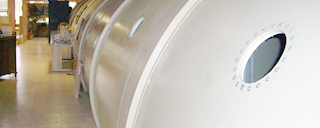
Hyperbaric Biosphere
Creation In Symphony Videos Now Online
Watch the entire video series on our YouTube Channel
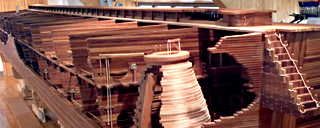
Noah's Ark Replica
Dramatic 25 Foot Detailed Replica
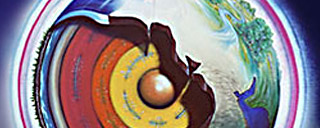
Biosphere Project
Re-creating What It Was Like Before Noah's Flood
5
Sep

Creation Devotional September 2 - Biology

Daily Devotional – September 2

Biology


A United States entomologist has estimated that one pair of Colorado potato beetles, if allowed to reproduce unchecked, would increase to over 60 million in one season. One female fly, beginning reproduction in May, would produce 143,875 bushels of flies by August. Aphids reproduce quickly, and in one season they can produce over 13 generations. If not held in check, the world’s aphid population would be ten sextillion aphids in one year. Imagine living in a world where insects were not controlled. But what controls insect reproduction rates?


Fortunately, birds have a large appetite for insects. It has been found that a scarlet tanager can eat over 600 gypsy moth caterpillars in 18 minutes. It has been estimated that chickadees alone eat over 8 billion insects per year. Birds keep the insect population in balance. Now consider what evolutionists say about the origin of birds – they did not evolve until many millions of years after insects appeared on our planet!


Without birds, insects would have decimated the world’s vegetation. The world would have been a bleak place with little life. What we see is actually what God has said, that He created both birds and insects during the first week of creation at the very beginning of time.


As soon then as they were come to land, they saw a fire of coals there, and fish laid thereon, and bread.

~ John 21:9


Source: "Pearls in Paradise" by authors Bruce Malone and Jule Von Vett

References for this devotional.

5
Sep

Creation Devotional August 29 - Biology

Daily Devotional – August 29

Biology


The archer fish, named for its expertise in archery, has a distinctive way of getting its supper. This fish shoots its prey with water bullets! The aquatic sharpshooter shoots these “bullets” up to nine feet away with deadly accuracy to knock its prey off overhanging leaves and branches. To accomplish this requires the fish to have a unique design.


This small fish has a mouth that is angled upward with the roof of its mouth having a groove to hold the tongue. When the gills ‘pop’ or slam shut, water is shot through the mouth as the tongue presses into the groove. The tip of the tongue directs the water bullets - adjusting for velocity and volume in order to precisely hit the insect. The cricket, grasshopper, or butterfly falls into the water to be quickly eaten.


But the archer fish’s design is brilliant in many other ways. In order to conceal its position when hunting for insects above the water, its dorsal fins (the fins on its back) are farther back than almost all other fish. In this way, the hunter remains underwater and does not reveal its location. The archer fish’s eyes are also unique. They have a special portion of the retina that swivels into place allowing it to look at the air above the water. Try this when you are swimming, with your mask on underwater, try looking up into the air above the water. It is almost impossible to see anything clearly above the surface of the water in this way - but not for the archer fish!


The archer fish is uniquely made - from its angled mouth to the groove in the roof of its mouth; from the dorsal fin placed farther back to the swiveling retina allowing it to clearly see up out of the water and into the air. How does evolution explain this? Remember that the only option evolution has for explaining life is non-directed, non-purposeful mutations over millions of years. Other fish get their food in the water; no fish ever hunted its food in the air! So where did the archer fish get this idea? He didn’t. The archer fish testifies to the genius of its Maker.


The Lord sitteth upon the flood; yea, the Lord sitteth King forever.

~ Psalm 29:10


Source: "Pearls in Paradise" by authors Bruce Malone and Jule Von Vett

References for this devotional.

22
Aug

Creation Devotional August 27 - Biology

Daily Devotional – August 27

Biology


Does this sound like the plot from a poor horror movie? A parrot attacks and kills a sheep - even burrowing into the sheep’s body to devour its kidneys while the sheep is still alive! That is what was happening in New Zealand’s high country during the late 1800s. Naturalists were stunned as they discovered that local birds (called keas) were killing and eating thousands of sheep. These parrots normally ate seeds and fruit. Why was this taking place? As sheep were introduced into New Zealand’s highland country, the habitat changed drastically, and the parrot’s old food source was greatly diminished. How they learned to eat meat is not known. The New Zealand kea became so hated that in the hundred year period between 1870 -1970, an estimated 150,000 were killed. Today’s keas are not showing this type of behavior.


In 2002, a British researcher reported that he saw a sheep eating a bird; the sheep had snatched and eaten a grouse in the scrublands. This was not normal behavior for a sheep, for they are herbivores, not carnivores. But that was not the only such report, CNN in 1999 reported that Hussein al-Marqouqi’s sheep ate nine chickens. Also, out of China’s Sichuan province comes a report of a panda killing and eating 26 goats. These types of accounts of plant-eating animals devouring meat are not as uncommon as one might think. After the Fall, certain animals started eating meat; prior to the Fall, all were plant eaters. These reports can give us insights into how animals became carnivores.


And to every beast of the earth, and to every fowl of the air, and to everything that creepeth upon the earth, wherein there is life, I have given every green herb for meat: and it was so.

~ Genesis 1:30


Source: "Pearls in Paradise" by authors Bruce Malone and Jule Von Vett

References for this devotional.

22
Aug

Creation Devotional August 20 - Biology

Daily Devotional – August 20

Biology


There is no need for a bug zapper when a chameleon is around. With stealth and patience, the chameleon moves along a branch. His feet are ideally made to grasp branches with little effort. His tail is ever ready to catch the branch should he fall. His eyes are unique, like turrets on a tank, swiveling independently to see in every direction – a full 360 degrees. Each eye is also like a telephoto lens, adjusting and calculating distances with precise accuracy.


When prey is located, both eyes focus on the bug, and Zap! The chameleon’s catapulting tongue shoots out five times faster than the speed of a jet fighter plane being catapulted from the deck of an aircraft carrier – 16 times the acceleration of gravity (16 g). The tongue itself is about twice as long as his body as it is propelled forward. This long tongue is stored on a bone – similar to how a long, sleeved sweater can be pushed up one’s arm. When the chameleon sees the bug, he takes aim, cocks, and fires his tongue forward with a catapult motion. A fraction of a second before contact, a sticky tongue pad forms into a suction cup at the tip of the tongue – complete with finger-like extensions at the tip (like an elephant’s trunk) to wrap around the bug. The bug is caught and brought in for lunch. All this happens faster than the blink of an eye! How many years did the chameleon stumble along trying to develop his feet, eyes, and specialized tongue in order to catch lunch? What we see is marvelous design that should bring us to our knees in worship of the Designer, God.


And all men shall fear, and shall declare the work of God; for they shall wisely consider of his doing.

~ Psalm 64:9


Source: "Pearls in Paradise" by authors Bruce Malone and Jule Von Vett

References for this devotional.

22
Aug

Creation Devotional August 16 - Biology

Daily Devotional – August 16

Biology


A hermit crab cannot make its own shell to live in but has to find an empty shell to occupy. Once found, he backs into the shell; his twisted body is ideally designed to fit into a spiral shell. The crab uses his two back legs to grip the inside of the shell, keeping him firmly in place. The two front legs are used for walking, with the right one being much larger than the left. This right claw can be used as a “door” when he wants to blockade himself inside the shell. When the hermit crab gets too large for his shell, he leaves it and finds another larger shell to live in.


Often, a hermit crab carries a sea anemone on his shell. Sea anemones are covered with stinging cells, which release poison and kill the crab’s enemies when touched. When a hermit crab has to move to a new home, he will “plant” the anemone on his new shell. How did the hermit crab get his spirally curved body that fits perfectly in a shell? How did he get his extra-large right claw that acts as a door to his home? And how did he discover that it was good to have a sea anemone living on his shell? How does evolution explain these features? It is much easier to explain them if we accept that God created the hermit crab with these special features.


The foxes have holes, and the birds of the air have nests…

~ Matthew 8:20a


Source: "Pearls in Paradise" by authors Bruce Malone and Jule Von Vett

References for this devotional.

22
Aug

Creation Devotional August 14 - Biology

Daily Devotional – August 14

Biology


Freshwater mussels have a very unusual and complex life cycle. One part of their life cycle requires the use of a fish as a host. But how does the mussel get its larvae into the fish? One mussel found in the waters of North America, the “snuff box mussel,” uses an amazing method. This mussel does what many sport fishermen do; it catches a fish, and then releases it.


When the mussel is ready to release its larvae for the next stage in its reproductive life cycle, it catches a host fish by closing its shell on its head or snout and holds onto the fish until the larvae are released and attach themselves to the fish’s gills. Then the mussel releases the fish. Weeks later, the larvae have grown and dropped off the fish to continue the mussel’s life cycle. How does evolution explain this? How does a mussel that has no eyes grab a logperch fish? The best explanation is that God designed this specific life cycle to reveal His cleverness to us.


For great is the Lord, and greatly to be praised….

~ 1 Chronicles 16:25


Source: "Pearls in Paradise" by authors Bruce Malone and Jule Von Vett

References for this devotional.

22
Aug

Creation Devotional August 13 - Biology

Daily Devotional – August 13

Biology


Did you know that the lampsillis mussel has its own fishing lure? These mussels live in streams and lakes. When it is time to send out its larvae, it pushes part of its soft body out of its shell. This fleshy mantle mimics a little minnow – it even has “eyes.” The lure movement is also astonishingly like a live minnow, even gulping with its mouth.


When a “host fish.” a largemouth bass, comes close to the mussel and “takes the bait.” the mussel shoots a cloud of larvae into the fish’s mouth where they clamp onto its gills. Here the larvae stay for weeks sucking the blood from the host fish; finally, they drop off when they are large enough to survive as adult mussels.


How can a mussel evolve the right lure for the host fish? How can a mussel that has no eyes know what the lure needs to look like or when a bass will come to its lure? If the mussel did not shoot its larvae into the host fish, then it would go extinct. Throwing the word like “evolution” at this amazing process does not explain how it could have developed. It had to be designed to work the way it did from the beginning, or it would not work at all.


And blessed be his glorious name for ever: and let the whole earth be filled with his glory; Amen, and Amen.

~ Psalm 72:19


Source: "Pearls in Paradise" by authors Bruce Malone and Jule Von Vett

References for this devotional.

22
Aug

Creation Devotional August 10 - Biology

Daily Devotional – August 10

Biology


Who cleans up the seal and penguin colonies? The snowy sheathbill bird. This white bird looks like a cross between a pigeon and domesticated hen and is widespread across the Antarctica region. It hangs out in the seal and penguin colonies during breeding season. What we think is disgusting, they think is delicious.


Sheathbills eat dead seals, penguins and their droppings. These birds are the clean-up crew, making the colony a healthier place. By removing dead animals, these birds limit the spread of diseases. God’s attention to every detail of life is apparent in His creative details for making healthy seal and penguin colonies at the far ends of the Earth.


The birds round about are against her; come ye, assemble all the beasts of the field, come to devour.

~ Jeremiah 12:9


Source: "Pearls in Paradise" by authors Bruce Malone and Jule Von Vett

References for this devotional.

22
Aug

Creation Devotional August 9 - Biology

Daily Devotional – August 9

Biology


A scientist pondered what she was seeing on the oleander shrub. She had been looking at a shrub and noticed a fly moving around, but upon closer examination, it looked like ants hitching a ride on the fly’s wings. But the ants looked too symmetrical, so she got out her microscope. She was astounded to discover one ant “painted” on each wing of the fruit fly (Goniurellia tridens).


Not only was there a perfect representation of an ant on each wing, but it was so well done that each “painting” displayed an ant’s head, thorax, and abdomen (the three parts of an insect), six legs and two antennae. When frightened, the fruit fly fluttered its wings, causing the two ant-like images to move back and forth, confusing a predator and allowing the fruit fly to dart away. How do evolutionists explain how these images got “painted” on the wings? They don’t – they simply state that “evolution did it.” Did the fruit fly have the mental ability to “paint” these images with its DNA code? When we see perfectly designed images with precise detail, we know there must be a designer, and that designer is God.


Unto thee lift I up mine eyes, O thou that dwellest in the heavens.

~ Psalm 123:1


Source: "Pearls in Paradise" by authors Bruce Malone and Jule Von Vett

References for this devotional.

12
Aug

Creation Devotional August 7 - Biology

Daily Devotional – August 7

Biology


Have you ever heard of a bird that sews its nest? This bird, which lives in Southeast Asia, is aptly named the “tailor bird.” The tailor bird starts with large, green tree leaves and pokes holes with its sharp beak along the edges of the leaves. Then, it uses spider webs or grasses to sew the leaves into a cylinder shape. Now the bird builds its nest inside of this cylinder. When the chicks hatch, they are hidden away behind a green curtain of leaves.


How does the tailor bird know how to sew? Did the young, female birds go to sewing classes at bird school? No, these birds are born with this ability programmed in their brains. Scientists call this programming “instinct,” but have never really been able to explain from where these instincts come from. It is as if a program was written in the hard drive of their brain. When we see a program, we know there must be a programmer, and this programmer is God.


Touching the Almighty, we cannot find him out: he is excellent in power….

~ Job 37:23


Source: "Pearls in Paradise" by authors Bruce Malone and Jule Von Vett

References for this devotional.

ABOUT THE MUSEUM
The Creation Evidence Museum
of Texas is a 501(c)3 non-profit
educational museum chartered
in Texas in 1984 for the purpose
of researching and displaying
scientific evidence for creation.
CONTACT INFO.

3102 FM 205
Glen Rose, Texas 76043
Phone: 254-897-3200

Map Pin   Location Map

HOURS

Thursday - Saturday
10am - 4pm

ADMISSION

$5 Per Person
FREE - Children 5 & Under

Creation Evidence Museum Building

Use & Privacy Policy  |  Site Map

All contents © 2013 Creation Evidence Museum of Texas. All rights reserved. Please note that any use of content downloaded or printed from this site is limited to
non-commercial personal or educational use, including "fair use" as defined by U.S. copyright laws.