




Location
 Contact Us
 
Creation Model
Noah's Ark
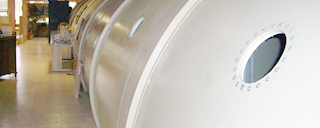
Hyperbaric Biosphere
Creation In Symphony Videos Now Online
Watch the entire video series on our YouTube Channel
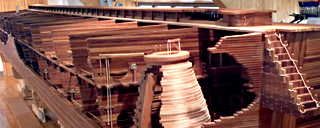
Noah's Ark Replica
Dramatic 25 Foot Detailed Replica
Biosphere Project
Re-creating What It Was Like Before Noah's Flood
8
Jul

Creation Devotional June 14 - Biology

Daily Devotional – June 14

Biology


How does an octopus change the color of its skin to match his surroundings in the blink of an eye? Below the top layer of protective skin, an octopus has three more layers (chromatophore layers) with thousands of tiny, balloon-like sacs filled with different pigment colors. The top layer of chromatophores has black and brown colored sacs, the middle layer has red and orange colored sacs, and the third layer has yellow colored sacs. Nerves and muscles cause the balloon-like sacs to expand and contract. When the sac expands, the color in that layer becomes more visible, and when contracted, the color becomes less visible. But the octopus camouflage system is even more complex. The fifth layer down is filled with iridophores, which are reflecting plates that give the octopus iridescent golds, silvers, blues and greens. The sixth or bottom layer contains leucophores, which mirror back colors from any surrounding environments.


Octopus skin has inspired researchers to develop a high-tech camouflage fabric. So far, the fabric can automatically shift between white and black as well as making shades of gray. One of the engineers noted that, “…looking at moves of squid, octopuses, and cuttlefish, you just (realize) that you’re not going to get close to that level of sophistication.” This engineer knows the difficulty of making such a fabric. When man tries to copy what has already been made but cannot even come close, we must stand in awe of the original design Engineer, God, Himself!


Let the heavens be glad, and let the earth rejoice: and let men say among the nations, The Lord reigneth. Let the sea roar, and the fulness thereof: let the fields rejoice, and all that is therein.

~ 1 Chronicles 16: 31-32


Source: "Pearls in Paradise" by authors Bruce Malone and Jule Von Vett

References for this devotional.

8
Jul

Creation Devotional June 13 - Paleontology

Daily Devotional – June 13

Paleontology


How long does it take a fossil to form? People are conditioned to think about millions of years and evolution whenever they hear the word “fossil.” But is this really a valid conclusion or just storytelling?


Near York, England is the Dripping Well of Yorkshire. This place is famous for turning soft cuddly teddy bears into stone. Since the 1600’s, this has been a tourist attraction where people have hung clothes, hats, shoes, and, yes, even teddy bears under a waterfall that has turned each into stone.


The waterfall’s water originates underground and has an extremely high mineral content. As the water splashes onto the hanging objects, the mineral calcite (calcium carbonate) is deposited along with small amounts of other minerals. Over the months, these deposits build up and coat the object with a crust of rock. Petrifaction time depends on the size and porosity of the object. Small teddy bears turn to stone in three to five months. Larger teddy bears take six to twelve months.


This is not the only place in the world where petrifaction has been observed. Australia has its own petrified waterwheel that has become totally encased in stone in only decades, while New Zealand has a petrified bowler hat on display. It does not take millions of years for petrifaction; it just takes the right conditions.


Thou coverest it with the deep as with a garment: the waters stood above the mountains. At thy rebuke they fled; at the voice of thy thunder they hasted away.

~ Psalm 104:6,7

8
Jul

Creation Devotional June 12 - Biblical Accuracy

Daily Devotional – June 12

Biblical Accuracy


The continued existence of the Jewish people is one of the most amazing, fulfilled prophecies of the Bible. About 4,000 years ago, God called a man named Abram out of his country to a promised land. God promised that a great nation of innumerable people would come from him and changed his name to Abraham - even though he was almost 100 years old and childless. Two hundred and fifteen years later, Abraham’s descendants settled in Egypt. While in Egypt, Abraham’s descendants increased greatly - numbering in the millions within 500 years of Abraham’s death. As they were returning to the Promised Land, Moses gave them many warnings about the consequences of being disobedient to God (see Deuteronomy chapters 28-33).


Because of their rebellion, they were again banished from their homeland in 70 A.D. The Romans destroyed the city of Jerusalem and scattered the Jewish people. For almost 1900 years, the Jews wandered the Earth. This culminated in the Holocaust of World War II. In 1948, the state of Israel was reborn, and many Jews returned to their homeland. Throughout this entire time, the Jewish people never lost their national identity. History has shown that people who leave their homeland will lose their national identity within five generations - being absorbed into the new culture. Have you ever heard a person say, “I’m a Moabite, or I’m a Philistine? Ammonite? Edomite?” These were the nations that lived around Israel. Obviously, they have not survived. Yet for the past 4000 years, people have continued to say, “I’m Jewish” or “I’m an Israelite.” God is faithful to fulfill what He says!


And I will make of thee a great nation;

~ Genesis 12:2a


Source: "Pearls in Paradise" by authors Bruce Malone and Jule Von Vett

References for this devotional.

8
Jul

Creation Devotional June 11 - Biology

Daily Devotional – June 11

Biology


Spider webs are known for their strength, but that is not the only thing needed to capture a flying insect. The web needs to be sticky, and spider webs are definitely sticky. You may have noticed this when cleaning up cobwebs – they are very difficult to remove from your hands. Spiders place tiny glue droplets, about 20 drops every 1/16 inch, along certain strands of their spider web. Their insect prey is caught by this glue. But this is no ordinary glue that just sticks things together. This glue is “smart glue.”


Imagine a flying insect hitting the super-sticky web and getting glued on. The spider needs to remove the insect without getting himself stuck, but how does he do it? He waits patiently. This glue is the stickiest when the flying insect hits the web at high speed. When the insect struggles in the web at a lower speed, this glue acts like a rubber band. When the struggling insect tires and stops moving, the glue gets even less sticky - allowing the spider to pull its prey loose and retrieve its meal. Researchers are now trying to copy this “smart glue” that has variable stickiness according to each situation. Scientists recognize a good design when they see it. If there is a design, there must be a Designer, and that is God.


O give thanks unto the Lord; call upon his name:  make known his deeds among the people.

~ Psalm 105:1


Source: "Pearls in Paradise" by authors Bruce Malone and Jule Von Vett

References for this devotional.

10
Jun

Creation Devotional June 10 - Biology

Daily Devotional – June 10

Biology


Have you ever thought about a spider web saving a bird? Every year, many birds are killed when they fly into window glass. Either they can’t see the window glass, or they see the reflections of nearby trees, sky, and other objects - either way, they slam into the window glass and are killed. It has been found, however, that spiders that spin orb webs (spiral wheel shaped webs) use silk that reflects ultraviolet light. We can’t see the UV light, as it is outside the range of human vision, but many birds and insects can see it. Biologists have discovered that the use of this UV-reflecting web material serves two important purposes:


  1. It attracts insects like a neon sign; some webs even display a flowerlike pattern.
  2. It warns birds not to fly into the web as if to say, “I don’t want to rebuild this web, so please avoid.”


The Arnold Glass Corporation has copied this UV reflecting property by coating their glass with criss-crossing UV reflecting strips. This coating is invisible to humans but not to birds. Birds make every effort to avoid this UV-treated glass. Nature is filled with design ideas, but of course, God put them there when He created the world! His power is displayed through what He has made. Who would have thought that spider webs would lead to protecting birds!


By the word of the LORD were the heavens made; and all the host of them by the breath of his mouth. He gathereth the waters of the sea together as an heap: he layeth up the depth in storehouses. Let all the earth fear the LORD: let all the inhabitants of the world stand in awe of him. For he spake, and it was done; he commanded, and it stood fast.

~ Psalm 33:6-9


Source: "Pearls in Paradise" by authors Bruce Malone and Jule Von Vett

References for this devotional.

10
Jun

Creation Devotional June 9 - Design

Daily Devotional – June 9

Design


From peacocks to porcupines; bacteria to blue whales; raindrops to oceans - everyone in the world sees the design in nature. This is called general revelation. God has communicated about Himself to all persons, in all places, throughout history. He has done that through nature. When someone studies a leaf, the Moon, or the smallest cell, he sees evidence of order, design, and purpose.  Who is the One who created this or that? Who is the designer? That should drive the person to find the designer.


Who is this Designer? That search leads to what is called special revelation, that is, the Bible. It is there, in Scripture, that a person discovers the Designer, Creator, and Redeemer of the universe. Then, the God of the Bible will tell him about how sin entered the world, how a Redeemer was sent, and how he can spend eternity with the God of the universe. Special revelation is “special” because it is the key that opens the door between Heaven and Earth. Nature (general revelation) is meant to be the drawing card that leads us to the God of the Bible (special revelation).


For the invisible things of him from the creation of the world are clearly seen, being understood by the things that are made, even his eternal power and Godhead; so that they are without excuse:

~ Romans 1:20


Source: "Pearls in Paradise" by authors Bruce Malone and Jule Von Vett

References for this devotional.

10
Jun

Creation Devotional June 8 - Microbiology

Daily Devotional – June 8

Microbiology


Every microsecond, every cell in your body is converting food to usable energy in order to run the chemical processes of your body. The primary source of the cell’s energy is a chemical called adenosine triphosphate (ATP). Your body literally makes and consumes an amount of ATP equivalent to the entire weight of your body each day. This ATP is then converted into the various chemicals and components needed to keep your body operating. So, where does all this ATP come from? Inside the mitochondria within each of our over ten trillion cells are little spinning molecular motors that operate at close to 99.99% efficiency (gasoline motors operate at about 35% efficiency.)1 These ATP generating motors are so small that 100,000 of them would have to be lined up end to end to reach across 1 millimeter. Also, they spin at 1000 RPM while spewing out ATP molecules.


But where do these motors come from?

  1. These motors are made using information coming from the DNA molecule.
  2. In order to open the DNA molecule, energy from ATP is needed.
  3. In order to make the ATP, the motor is needed.


The information needed to make the motors is in DNA. It takes the motor’s ATP to open the DNA, but we can’t make the ATP unless the information on how to make the motor is provided. Complicated isn’t it! All the parts, processes, and instructions needed to be present and fully functioning from the beginning. The more we learn about the operation of our bodies, the more we see that an incredibly intelligent Designer made every cell within our bodies.


My mouth will speak in praise of the Lord, and let all flesh bless his holy name for ever and ever.

~ Psalm 145:21


Source: "Pearls in Paradise" by authors Bruce Malone and Jule Von Vett

References for this devotional.

10
Jun

Creation Devotional June 7 - Biology

Daily Devotional – June 7

Biology


Marine iguanas are excellent swimmers and search for their food underwater. Sharks, however, love to eat marine iguanas and have sensitive hearing. They can hear the heartbeat of an iguana 12 feet away. So what’s an iguana to do? Stop its heart from beating?


Incredibly, an iguana can stop its heart for up to 45 minutes! How do evolutionists explain this ability? A creature’s ability to stop its heart requires some major internal modifications. For an iguana to stop its heart for 45 minutes without death is astonishing! Only a wise Creator would endow a marine iguana with this unbelievable ability – thereby giving glory to Himself.


Declare his glory among the heathen; his marvelous works among all nations.

~ 1 Chronicles 16:24


Source: "Pearls in Paradise" by authors Bruce Malone and Jule Von Vett

References for this devotional.

10
Jun

Creation Devotional June 6 - Cosmology

Daily Devotional – June 6

Cosmology


From the beginning of time, the night sky has caused us to look up and wonder how many stars are there. How far away are they? Early astronomers thought they were just beyond our reach up in the sky and counted about 2000 stars.


Stars are so far away that we do not measure their distance from Earth in miles but in light years. The closest star to Earth is Proxima Centauri. If you could travel at the speed of light, 186,000 miles per second, it would take 4.3 years to get there. One light year is about 6 trillion miles. Proxima Centauri is 4.3 light years or 25,278,089,104,689 miles away. It is much easier to say 4.3 light years. Our Milky Way is about 70,000 light years across or about 411,503,776,122,852,541 miles. Many stars in the universe seem to be billions of light years away. Psalm 103:11 (NKJV) tells us, “For as the heavens are high above the earth, so great is His mercy toward those who fear Him.” The great distances to the stars help us understand God’s great mercy towards us. In our natural state, we are in rebellion against God and do not deserve forgiveness. Yet in God’s great mercy, He forgives the repentant sinner. How great is God’s mercy? Great enough that He was willing to die to bring us back into fellowship with Him. Just as the distance to the stars seems beyond comprehension, so there is no limit to His love for us. Step outside on a starry night and gaze at the vast distances of these stars; that is the magnitude of God’s mercy!


For as the heaven is high above the earth, so great is his mercy toward them that fear him.

~ Psalm 103:11


Source: "Pearls in Paradise" by authors Bruce Malone and Jule Von Vett

References for this devotional.

10
Jun

Creation Devotional June 5 - Biology

Daily Devotional – June 5

Biology


When looking at a pond, have you ever noticed bugs walking on the water? These bugs move across the surface of the pond so quickly that they are almost impossible to see. What you probably saw was a water strider. This small insect uses the surface tension of the water AND the design of its legs to walk on water.


The water strider is designed with feet that are covered with thousands of fuzzy, wax-coated hairs. Each of these tiny hairs is also covered with even smaller grooves. The leg hair of a water strider is vastly narrower than a human hair. When wet, the microscopic grooves trap air - which allows the water strider to essentially “float” on a cushion of air across the water’s surface. But a property of water called “surface tension” also comes into effect. Water molecules are attracted to each other and like to stay together. This creates surface tension that acts as a delicate membrane. Water striders move quickly across this water membrane reaching speeds equivalent to a person moving at 400 miles per hour. Engineers are now studying the legs of water striders in order to develop new water repellent fabrics and paints. They even speculate that water striders may lead to the design of miniature, floating robots to monitor water quality. Engineers are only copying what the Great Engineer designed in the beginning.


He hath made his wonderful works to be remembered:...

~ Psalm 111:4


Source: "Pearls in Paradise" by authors Bruce Malone and Jule Von Vett

References for this devotional.

ABOUT THE MUSEUM
The Creation Evidence Museum
of Texas is a 501(c)3 non-profit
educational museum chartered
in Texas in 1984 for the purpose
of researching and displaying
scientific evidence for creation.
CONTACT INFO.

3102 FM 205
Glen Rose, Texas 76043
Phone: 254-897-3200

Map Pin   Location Map

HOURS

Thursday - Saturday
10am - 4pm

ADMISSION

$5 Per Person
FREE - Children 5 & Under

Creation Evidence Museum Building

Use & Privacy Policy  |  Site Map

All contents © 2013 Creation Evidence Museum of Texas. All rights reserved. Please note that any use of content downloaded or printed from this site is limited to
non-commercial personal or educational use, including "fair use" as defined by U.S. copyright laws.